Key takeaways
- Tooth count drives finish, not speed: 24 to 40 teeth clear chips fast for ripping thick stock, 60 teeth handle general crosscutting, and 80 to 100 teeth give glass-smooth edges on plywood, melamine, and hardwood trim. High tooth counts in thick solid wood invite burning, so match the blade to the cut.
- Confirm diameter and arbor before anything else: Most portable and cabinet saws take a 10-inch blade with a 5/8-inch arbor. Compact jobsite saws use 8-1/4-inch, and larger miter saws often want 12-inch with a 1-inch bore. A diamond knockout in the arbor hole adds flexibility for saws that need it.
- Look at the grind, not just the carbide claim: Alternate top bevel (ATB) teeth slice cross-grain fibers cleanly and are the right choice for finish cuts. Flat-top or FTG grinds are built for ripping with the grain and leave a squarer kerf for joinery.
- Kerf width should suit your motor: Thin-kerf blades remove less material and let a 15-amp contractor saw pull through hardwood without bogging. Full-kerf plates resist deflection better but demand more power and a well-tuned splitter or riving knife.
- Buy sets if you swap tasks often: A two- or three-blade kit costs less than buying blades individually and means you stop compromising. Keeping a dedicated rip blade and a dedicated finish blade on the wall is the single cheapest upgrade to cut quality.
The blade that shipped with your table saw was chosen to be adequate at everything and excellent at nothing. That becomes obvious the first time you rip a maple panel and spend twenty minutes sanding out burn marks, or crosscut plywood and watch the veneer splinter along the underside. Most tearout, wander, and scorching people blame on their saw is really a blade problem: wrong tooth count, wrong grind, or a plate that has lost its temper after too many hard passes.
This guide sorts through the 10-inch, 12-inch, and 8-1/4-inch blades worth bolting onto a home shop saw in 2026, including a few multi-packs that cover framing, ripping, and finish work without draining the tool budget. I have paid attention to what actually matters at the bench: how clean the cut face comes off the saw, whether the plate stays flat under load, and how the blade behaves in an underpowered contractor saw rather than a 5 HP cabinet machine.
Our top picks



As an Amazon Associate we earn from qualifying purchases at no extra cost to you. Ratings are shown as listed on Amazon.
🛒 Best Price Today on Amazon
Prime members get fast, free shipping on everything above, plus member-only deals. New members get a 30-day free trial — cancel anytime.
How to Choose a/an Saw Blade For Table Saw (2026)
- Tooth count drives finish, not speed: 24 to 40 teeth clear chips fast for ripping thick stock, 60 teeth handle general crosscutting, and 80 to 100 teeth give glass-smooth edges on plywood, melamine, and hardwood trim. High tooth counts in thick solid wood invite burning, so match the blade to the cut.
- Confirm diameter and arbor before anything else: Most portable and cabinet saws take a 10-inch blade with a 5/8-inch arbor. Compact jobsite saws use 8-1/4-inch, and larger miter saws often want 12-inch with a 1-inch bore. A diamond knockout in the arbor hole adds flexibility for saws that need it.
- Look at the grind, not just the carbide claim: Alternate top bevel (ATB) teeth slice cross-grain fibers cleanly and are the right choice for finish cuts. Flat-top or FTG grinds are built for ripping with the grain and leave a squarer kerf for joinery.
- Kerf width should suit your motor: Thin-kerf blades remove less material and let a 15-amp contractor saw pull through hardwood without bogging. Full-kerf plates resist deflection better but demand more power and a well-tuned splitter or riving knife.
- Buy sets if you swap tasks often: A two- or three-blade kit costs less than buying blades individually and means you stop compromising. Keeping a dedicated rip blade and a dedicated finish blade on the wall is the single cheapest upgrade to cut quality.
The Best Saw Blade For Table Saw (2026)s Reviewed
FOXBC 10-Inch 80-Tooth Ultra Finish Blade
This is the blade I reach for when the cut face is going to be visible: 80 ATB teeth leave hardwood edges that need little more than a scuff with 220 grit, and it handles veneered plywood without chipping the top layer. Feed slowly and steadily in thicker stock, since the tight tooth spacing has less room to eject chips.
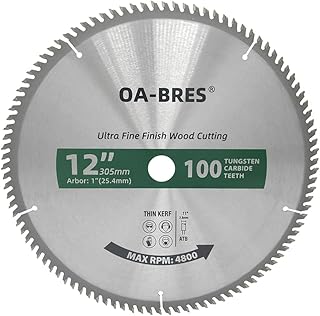
12-Inch 100-Tooth ATB Miter/Table Saw Blade
With a 1-inch arbor and 100 fine-ground teeth, this one belongs on a 12-inch miter saw doing casing, baseboard, and picture frame miters where a hairline joint matters. The extra diameter gives good tip speed, which is part of why the exit side of the cut stays so clean on painted trim.
FOXBC 8-1/4 Inch 60-Tooth Fine Finish Blade
Compact jobsite saws are usually stuck with coarse blades, and this 60-tooth option fixes that without overloading a small motor. The diamond knockout means it drops onto both round-arbor and diamond-arbor saws, which makes it a genuinely useful spare to keep in the truck.
10-Inch 80T Carbide-Tipped TCT Blade
A solid value pick for mixed material work, this 80-tooth carbide blade cuts wood, laminate, plastic, and composite decking with minimal melting or chipping when you keep the feed rate consistent. It also fits 10-inch miter saws, so one blade covers two machines in a small shop.
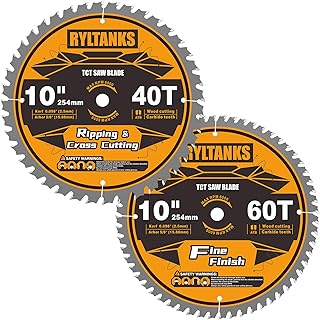
10-Inch 3-Pack: 32T, 60T, 80T
This is the most sensible starting point for anyone still using the factory blade. You get a 32-tooth for framing lumber and rough ripping, a 60-tooth general finish blade, and an 80-tooth for cabinet-grade cuts, which covers essentially every job a home furniture builder runs into.
Frequently Asked Questions
How many teeth do I need for cutting plywood?
Use 60 teeth minimum and 80 if you want near-zero tearout. Pair a high tooth count with a zero-clearance insert and score the cut line with a knife on show faces for the cleanest results.
Why is my blade burning the wood?
Burning usually means the blade is dull, the tooth count is too high for the thickness, or the fence is not parallel to the blade. Check fence alignment first, then confirm you are not feeding too slowly through the cut.
Can I use a miter saw blade on a table saw?
Often yes, provided the diameter, arbor size, and maximum RPM rating match your saw. Avoid blades with negative hook angles on a table saw, since they resist feeding and can make the cut feel like it is fighting you.
When should I replace instead of sharpen?
Quality carbide-tipped blades are worth resharpening two or three times. Once teeth are chipped, the plate is warped, or the carbide is ground thin, replace it rather than risk deflection and kickback.
Final Thoughts
For most home furniture work, the FOXBC 10-Inch 80-Tooth is the blade that will visibly improve your joinery and finish quality, while the 10-Inch 3-Pack with 32T, 60T, and 80T options is the smartest single purchase if you are building a shop from scratch. Trim carpenters running a 12-inch miter saw should add the 100-Tooth ATB blade for miters that close tight without filler.