Key takeaways
- Airflow: Check the spray gun’s required CFM at its stated PSI, then choose a compressor with comfortable headroom. Tank size alone does not guarantee usable airflow.
- Tank capacity: A larger tank gives the pump breathing room during a panel, reducing frequent cycling and helping maintain a smoother spray pattern.
- Moisture control: Plan on a regulator, water separator, and quality air hose. Drain the tank regularly, especially in humid garages, because condensation can ruin automotive paint.
- Noise and location: Ultra-quiet oil-free models are easier to live with indoors, but every compressor still needs ventilation, clearance, and a stable, level surface.
- Spray-gun match: A low-volume, low-pressure gun may suit a smaller compressor, while conventional and high-output guns generally need more continuous CFM than compact inflators can provide.
Painting a car at home is less about owning the biggest compressor and more about delivering steady, clean airflow. A unit that runs out of breath mid-panel can leave uneven coverage, while excessive vibration, oil carryover, or moisture in the airline can spoil an otherwise careful finish.
This guide focuses on practical garage use: spray-painting panels and furniture-sized parts, powering a detail gun, and handling supporting jobs such as tire inflation and air-tool work. I’ve compared tank capacity, airflow, noise, portability, and the day-to-day realities of setting up a clean DIY paint system.
Our top picks



As an Amazon Associate we earn from qualifying purchases at no extra cost to you. Ratings are shown as listed on Amazon.
🛒 Best Price Today on Amazon
Prime members get fast, free shipping on everything above, plus member-only deals. New members get a 30-day free trial — cancel anytime.
How to Choose a/an Air Compressor For Painting Cars (2026)
- Airflow: Check the spray gun’s required CFM at its stated PSI, then choose a compressor with comfortable headroom. Tank size alone does not guarantee usable airflow.
- Tank capacity: A larger tank gives the pump breathing room during a panel, reducing frequent cycling and helping maintain a smoother spray pattern.
- Moisture control: Plan on a regulator, water separator, and quality air hose. Drain the tank regularly, especially in humid garages, because condensation can ruin automotive paint.
- Noise and location: Ultra-quiet oil-free models are easier to live with indoors, but every compressor still needs ventilation, clearance, and a stable, level surface.
- Spray-gun match: A low-volume, low-pressure gun may suit a smaller compressor, while conventional and high-output guns generally need more continuous CFM than compact inflators can provide.
The Best Air Compressor For Painting Cars (2026)s Reviewed
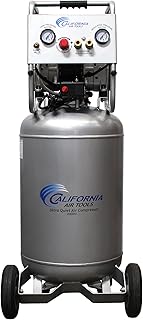
California Air Tools 20020AD 20-Gallon Compressor
This is the most convincing choice here for larger automotive projects because its 20-gallon tank and 2.0-hp motor provide useful reserve capacity between pump cycles. Wheels and an automatic drain valve make it more practical in a working garage, although its size means it is better parked in a dedicated spot than carried around.
California Air Tools CAT-4610AC Twin-Tank Compressor
The CAT-4610AC is a strong compromise for makers who want a quieter compressor without jumping to a full-size shop machine. Its oil-free, twin-tank design is compact and relatively easy to place near a workbench, making it a sensible match for touch-ups, smaller panels, and low-demand spray guns.
VEVOR 13-Gallon 2HP Air Compressor
With a 13-gallon tank, 125 PSI maximum pressure, wheels, and a stated 4.6 SCFM at 90 PSI, this VEVOR offers a useful amount of capacity for the money. The 66 dB operating claim is appealing for a home garage, but confirm the airflow requirements of your particular spray gun before treating it as a whole-car solution.
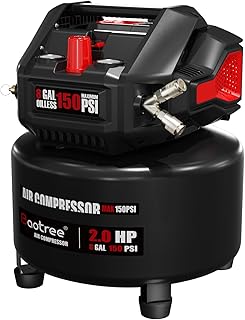
Baotree 8-Gallon Portable Air Compressor
Baotree’s 8-gallon oil-free unit is aimed at the DIY garage that needs one machine for repairs, nailing, inflation, and occasional spraying. Its compact footprint and stated 2.8 SCFM at 90 PSI make it more appropriate for short paint sessions or smaller guns than continuous full-panel work.
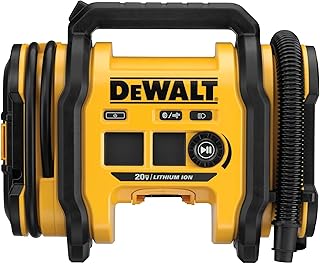
DEWALT DCC020IB 20V MAX Tire Inflator
This cordless DEWALT is wonderfully convenient for tire pressure, bike tires, and quick inflation jobs, with automatic shutoff and a built-in LED light. It is not a realistic compressor for automotive spray painting: its role is portable inflation rather than supplying the sustained airflow a spray gun needs.
Frequently Asked Questions
What size air compressor do I need to paint a car?
For serious automotive spraying, prioritize continuous CFM over horsepower or maximum PSI. A compressor with a generous tank and airflow exceeding your gun’s requirement is safer than a small unit that only reaches its advertised pressure briefly.
Can an 8-gallon compressor spray paint?
Yes, an 8-gallon model can handle small parts, spot repairs, and short passes when paired with a suitable low-demand gun. Expect more frequent cycling, and pause when pressure drops rather than forcing the gun to spray with weak airflow.
Is an oil-free compressor better for painting?
Oil-free compressors simplify maintenance and remove one possible source of oil contamination. They can be louder or have different duty-cycle limits, so filtration, moisture separation, and the manufacturer’s operating guidance still matter.
What else do I need besides the compressor?
Use a regulator, water separator, drainable airline, compatible spray gun, and suitable respirator and ventilation. Keep the hose clean, drain the tank after use, and test the spray pattern on scrap material before approaching a painted panel.
Final Thoughts
For the most capable DIY automotive setup, the California Air Tools 20020AD is the strongest pick, while the CAT-4610AC is a quieter choice for smaller garages and lighter projects. The VEVOR 13-gallon model fills the middle ground well, offering useful capacity and mobility without the footprint of a large shop compressor.