Key takeaways
- Tooth count vs. material thickness: Aim for at least three teeth engaged in the cut at all times. That makes 80 to 120 teeth ideal for 3/4″ hardwood, trim, and sheet goods, while 40 to 60 teeth handle thicker stock and framing lumber without bogging the motor or burning.
- Grind and hook angle: An ATB (alternate top bevel) grind slices wood fibers cleanly for crosscuts. TCG (triple chip grind) with a low or negative hook is what you want for aluminum, plastics, and laminates, since it shears rather than grabs.
- Kerf width: A 1/8″ full kerf tracks straighter and resists deflection on long miters. Thin-kerf blades ask less of underpowered saws but wander more in dense stock, so match kerf to your motor, not to the sale tag.
- Arbor and plate quality: Confirm the 5/8″ arbor fits without a bushing, then look at the plate itself. Laser-cut expansion slots and a hardened, tensioned body keep the blade flat when it heats up on repetitive cuts.
- Carbide grade and resharpenability: Micrograin C3 or C4 carbide holds an edge far longer through MDF and melamine. Thicker tips also mean the blade can be professionally resharpened two or three times, which changes the real cost per cut considerably.
The blade that shipped with your miter saw was chosen to hit a price point, not to leave a glass-smooth end grain on walnut. That’s the frustration most of us run into a few projects in: the saw itself is fine, but every crosscut needs sanding, the tearout on plywood veneer is ugly, and painted trim splinters right where the miter meets. Swapping the blade is the cheapest meaningful upgrade you can make to a chop saw, and it changes the machine more than another 2 amps of motor ever would.
Below are ten blades worth putting on your arbor in 2026, spanning ultra-fine finish blades for face frames and casing, general-purpose 60-tooth options for shop work, dedicated aluminum-cutting geometry, and a couple of value multipacks. I’ve grouped picks by what they actually do well rather than by tooth count alone, and the buying guide covers the specs that matter once you’re standing in the aisle.
Our top picks


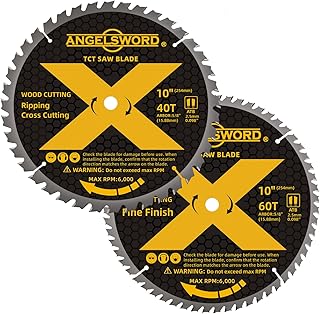
As an Amazon Associate we earn from qualifying purchases at no extra cost to you. Ratings are shown as listed on Amazon.
🛒 Best Price Today on Amazon
Prime members get fast, free shipping on everything above, plus member-only deals. New members get a 30-day free trial — cancel anytime.
How to Choose a/an 10 Miter Saw Blades (2026)
- Tooth count vs. material thickness: Aim for at least three teeth engaged in the cut at all times. That makes 80 to 120 teeth ideal for 3/4″ hardwood, trim, and sheet goods, while 40 to 60 teeth handle thicker stock and framing lumber without bogging the motor or burning.
- Grind and hook angle: An ATB (alternate top bevel) grind slices wood fibers cleanly for crosscuts. TCG (triple chip grind) with a low or negative hook is what you want for aluminum, plastics, and laminates, since it shears rather than grabs.
- Kerf width: A 1/8″ full kerf tracks straighter and resists deflection on long miters. Thin-kerf blades ask less of underpowered saws but wander more in dense stock, so match kerf to your motor, not to the sale tag.
- Arbor and plate quality: Confirm the 5/8″ arbor fits without a bushing, then look at the plate itself. Laser-cut expansion slots and a hardened, tensioned body keep the blade flat when it heats up on repetitive cuts.
- Carbide grade and resharpenability: Micrograin C3 or C4 carbide holds an edge far longer through MDF and melamine. Thicker tips also mean the blade can be professionally resharpened two or three times, which changes the real cost per cut considerably.
The Best 10 Miter Saw Blades (2026)s Reviewed
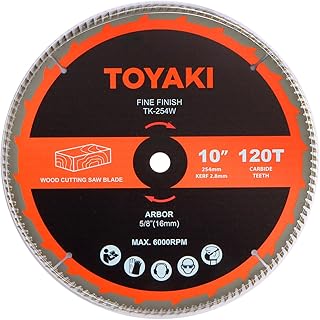
120-Tooth Fine-Finish 10-Inch Blade
With 120 teeth on a 10″ plate, this is the blade to reach for when the cut face becomes the finished face, like mitered picture frames or pre-primed casing. Feed it slowly and let the tooth count do the work, since crowding it in thick hardwood generates heat faster than the plate can shed it.
WEN BL1080 10-Inch 80-Tooth
WEN’s 80-tooth carbide-tipped blade is the sweet spot for most home shops, clean enough for oak trim and plywood crosscuts without the burning risk of a 120-tooth grind. Build quality punches above its price bracket, and the tips are substantial enough to survive a resharpening.
WEN BL1060 10-Inch 60-Tooth
The 60-tooth BL1060 is the do-everything blade I’d leave mounted for general shop work, handling 2x material, poplar, and cabinet plywood with only light sanding needed. It clears chips well, so you can keep a reasonable pace through a stack of parts.
US1080-MTR 80-Tooth Made in USA
Domestically manufactured with tooth geometry specifically optimized for crosscuts and miters, this 1/8″ full-kerf blade holds a line beautifully on wide boards and compound angles. The stiffer plate is the difference-maker on long 45s where thin-kerf blades tend to flex.
TCG Aluminum-Working 120-Tooth Blade
The triple chip grind here is purpose-built for non-ferrous metal, extrusion, and plastic, shearing material off in small chips instead of hooking into it. Use wax lubricant, clamp the workpiece firmly, and it’ll produce edges on aluminum angle that need nothing more than a file pass.
Frequently Asked Questions
Will more teeth always give a cleaner cut?
Only up to a point. Beyond roughly 80 teeth, gullets get small and chip evacuation suffers, so in thick or resinous stock a 120-tooth blade can actually burn where an 80-tooth would cut clean.
Can I cut aluminum with a standard wood blade?
It’s risky. A positive-hook ATB blade can self-feed and grab the extrusion violently. Use a TCG blade with a low or negative hook angle designed for non-ferrous work.
How do I know when a blade is done?
Watch for increased feed pressure, burn marks appearing where there were none, and a change in sound. Often the blade is just resinous, so try a cleaning with pitch remover before replacing it.
Does a thin-kerf blade help on a small saw?
Yes, on 10″ saws with modest motors a thin kerf removes less material and reduces strain. The tradeoff is more deflection, so full kerf remains the better choice for precision miters.
Final Thoughts
For most home furniture builders, the WEN BL1080 delivers the best balance of finish quality and price, while the US1080-MTR is the upgrade worth paying for if you cut a lot of long miters and want a plate that refuses to flex. Keep the WEN BL1060 mounted for everyday shop work, and add the TCG aluminum blade only if metal is genuinely part of your workflow.