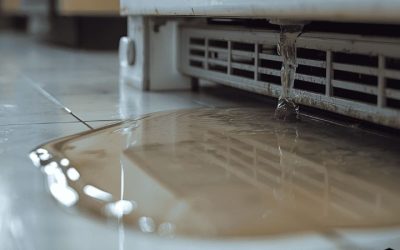
Minerals dissolved in brewing water can collect inside an espresso machine even when its visible parts look clean. Learning how to descale an espresso machine starts with identifying the exact model, not choosing a homemade acid recipe. With the approved product and a working machine, this is generally a manageable home-maintenance job, but the program and time required vary by design.
Quick Answer: Find your model’s descaling instructions, remove any water filter the manual tells you to remove, mix the specified descaler, run its prescribed water-path cycle, and complete every fresh-water rinse. Do not substitute a backflush cleaning tablet or interrupt a running automatic program.
As an Amazon Associate we earn from qualifying purchases.
By DIY Ideas 4 Home Editorial Team
Before You Start: Tools, Materials and Safety
Descaling treats mineral deposits within the heated water system. It is not the same as washing the drip tray, brushing the group head, or removing coffee oils with a backflush tablet. Breville’s Barista Express BES870 instruction manual explicitly separates its cleaning cycle from its descaling routine, so confirming which reminder you see matters before you put anything into the tank.
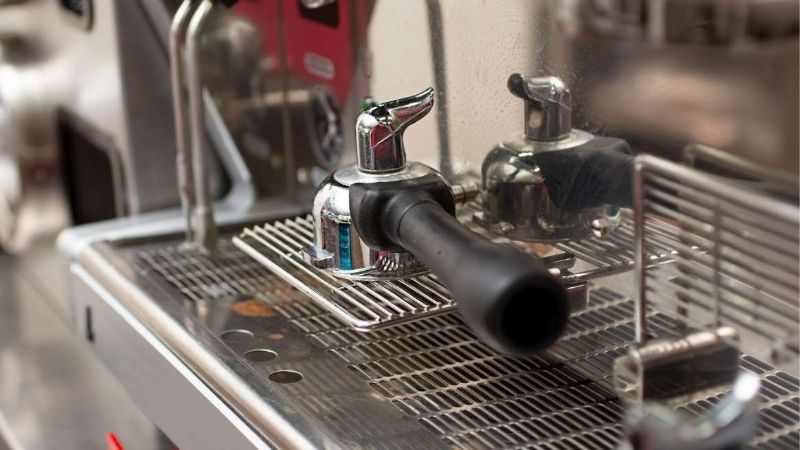
| Tool or Material | Size or Spec | Why You Need It | Substitute |
|---|---|---|---|
| Exact-model manual | Manufacturer’s descaling section | Confirms chemical, cycle, water route, and rinse | Official manufacturer support guide for the same model |
| Compatible descaler | Maker-approved dose and format | Removes mineral scale within intended materials | Only another product explicitly permitted by your maker |
| Fresh potable water | Amount shown in the manual | Dilutes descaler and flushes remaining solution | Filtered water if allowed by the manual |
| Collection container | Capacity specified for the machine | Catches hot waste liquid without overflow | Several stable containers if the maker permits pauses |
| Absorbent cloth and gloves | Clean cloth; chemical-resistant gloves if label requires | Helps protect skin and wipe spills promptly | Follow the product’s protective-equipment label |
Check Your Model, Indicator and Water Hardness
Look for the rating sticker on the bottom or back of the machine and open that precise manual. Breville’s Barista Express BES870 manual says a solid CLEAN/DESCALE light calls for descaling, while a flashing light calls for a separate coffee-oil cleaning cycle. The buttons and light meanings on another Breville, a De’Longhi, or a capsule machine may differ substantially.
Descaling frequency is driven by the maker’s alerts, your water hardness, and use. Nespresso’s Vertuo Up support guide cites about 300 cups, or roughly 100 liters of prepared coffee, as a general reference for that machine family, while emphasizing the app or machine alert. That is not an interval to impose on every espresso maker. If your unit lets you set water hardness, use the maker’s supplied test method instead of guessing a setting.
Choose an Approved Product and Prepare the Area
Read both the appliance manual and descaler label before opening the bottle or sachet. De’Longhi’s La Specialista Opera descaling FAQ warns that an unsuitable chemical or an incorrect cycle can produce faults outside its guarantee. Breville’s support guidance also advises against vinegar, and De’Longhi discourages it because of component compatibility and lingering odor. Do not combine vinegar, cleaning tablets, bleach, or different descalers.
Switch off and unplug the machine before handling removable components when the manufacturer directs you to do so. Let hot parts cool, empty the drip tray, and protect the counter from spills. The actual powered descaling program must then be run as directed; unplugging a machine midway through that program is not a normal cleaning step. Keep the chemicals away from food, children, and pets, and avoid hot splashes from the wand or outlet.
Know When Not to Descale It Yourself
Do not start a chemical cycle if the power cord is damaged, liquid reaches electrical controls, a fitting leaks inside the housing, or the pump is completely unable to move water. Descaler is not a repair for failed valves, overheating electronics, or split tubing. Some machines require technician-only service procedures; in that case, follow the maker’s service guidance rather than opening a boiler or disconnected electrical enclosure.
Also pause if you cannot positively identify the model or find a compatible descaler. Breville’s espresso troubleshooting support advises contacting support when a program cannot be started or completed, rather than repeatedly attempting uncertain button combinations. A few minutes spent obtaining the correct instructions is less risky than a guessed cleaning recipe that leaves acid in the water path.
How to Descale an Espresso Machine Step by Step
The sequence below describes the decisions shared across many household machines, not a universal button combination. The actual liquid dose, outlet routing, and rinse program always come from your own manual. For perspective, De’Longhi describes roughly 30 to 50 minutes for some fully automatic models, while Philips states that several of its Calc/Clean programs take approximately 30 minutes.
Step 1: Find the Descaling Program
Check whether your machine uses a touchscreen menu, a dedicated Calc/Clean icon, or a combination of physical controls. The De’Longhi La Specialista Opera uses a model-defined sequence involving the descale indicator and OK button. On Philips 2300 and 3300 machines, the official support guide instructs users to hold Calc/Clean for 3 seconds before starting the programmed cycle. Those actions are examples tied to their own machines, not alternatives to try at random.
Some traditional manual espresso machines have a different flow-based routine or a manufacturer’s restriction on which passages may receive descaler. Identify which dispensing points the guide names: brew outlet, hot-water spout, steam wand, or a designated maintenance outlet. If the manual gives no consumer-descaling method, stop here and seek the manufacturer’s recommended service path.
Step 2: Remove Filters and Empty Removable Parts
Empty old water, spent grounds, and the drip tray. Remove a water-softening cartridge only if the model’s directions specify removal. De’Longhi’s La Specialista Opera FAQ explicitly instructs owners to remove the water filter if fitted before adding descaler. Philips likewise tells owners of its 2300 and 3300 models to take out the AquaClean cartridge before starting the Calc/Clean routine.
Clear any coffee basket, capsule, or accessory only as instructed for your model. For example, the De’Longhi La Specialista Opera procedure calls for no attached portafilter while liquid exits the coffee and hot-water passages. By contrast, some other manual machines have a basket configuration prescribed for descaling. Put detachable milk containers aside when the maker says to remove them; cleaning milk residue is a separate maintenance task.
Step 3: Mix the Correct Descaler Dose
Measure precisely rather than using a stronger mixture to make the job faster. Breville’s Barista Express BES870 instruction manual specifies dissolving one Breville descaling-powder sachet in 34 fl oz, or 1 liter, of water. De’Longhi’s machine-descaling guide describes filling its designated tank mark A with 3.4 fl oz, or 100 mL, of EcoDecalk and then adding water up to mark B for the specified models. Different products and tanks cannot be treated as interchangeable.
Philips’ support procedure for its 2300 and 3300 machines instead calls for an entire bottle of Philips CA6700 descaler, with water added to that machine’s Calc/Clean mark. Check your own bottle size and manual before opening it. If the unit has a marked tank for the solution, use the mark exactly; do not infer the volume from another manufacturer’s example or dilute against the ordinary maximum-fill line unless instructed.
Step 4: Position the Waste Container Securely
Place a stable, heat-tolerant vessel beneath every outlet identified in the instructions, leaving enough clearance to avoid tipping. De’Longhi’s general descaling guide asks for a collection container of at least 68 fl oz, or 2 liters, for certain automatic models. Philips specifies a 1.5-liter bowl for its 2300 and 3300 process. Neither figure is an all-machine minimum; use the capacity your particular instructions require.
Check whether liquid may come out of more than one opening. A machine with a steam wand or dedicated hot-water outlet can route solution through those circuits during different stages. Position your container so both hands can remain clear of hot water while the program operates. Never hold a small mug against the wand or attempt to catch pressurized spray with your fingers.
Step 5: Start and Finish the Prescribed Cycle
Follow the maker’s exact starting controls and wait through its programmed dispensing and pauses. The machine may seem inactive while heating or soaking internal deposits; that does not mean the cycle has failed. De’Longhi’s La Specialista Opera FAQ says its automatic descale routine alternates discharge and pauses until the tank is empty. Other brands separate the brew, steam, and hot-water paths into distinct control steps.
Keep an eye on the collection vessel without opening the appliance or overriding safety switches. Breville’s BES870 manual says the tank must not be removed or completely emptied during its descaling process, although the cycle eventually requires a prescribed rinse. If flow stops unexpectedly, consult the model’s trouble guide before restarting. Repeating a chemical dose because no water appears can worsen a blockage rather than clear it.
Step 6: Rinse the Tank and Water Circuits Fully
When the instructions say the chemical stage is over, discard collected solution according to the descaler label, then rinse the removable tank with fresh water. Complete the entire clean-water cycle through the outlets the machine specifies. Breville’s BES870 manual instructs owners to refill the tank to its 68-fl-oz, or 2-liter, maximum and repeat the stated component-flushing steps after descaling. Do not substitute a quick espresso shot for that prescribed rinse.
Philips’ 2300 and 3300 support instructions describe a separate rinse lasting about 3 minutes after its descaling stage. The clean-water volume or number of rinse cycles on your machine can differ. Empty the receiving vessel as directed, refill when prompted, and do not brew coffee while an active descaling or rinse alert indicates an unfinished procedure.
Step 7: Restore the Filter and Confirm Normal Operation
Once the machine explicitly signals completion, reinstall or activate a fresh water filter if the manual requires it. Philips’ descaling guide notes that its AquaClean indicator may then remind the owner to install and activate the filter. Refit clean removable components and wipe the exterior after it cools. Confirm the water reservoir is seated properly and the drip tray is dry before preparing a drink.
Run any additional plain-water flush the manufacturer calls for, then observe water flow and listen for a normal operating sound. Check whether the descaling indicator has cleared. Do not judge success only by crema or flavor, which also change with coffee beans and grind settings. If flow remains very weak, the warning persists, or liquid appears under the sealed machine, stop and request model-specific support.
Products That Help
De’Longhi EcoDecalk Descaling Solution is the maker’s specified liquid for many De’Longhi espresso models; its maintenance guide describes a 100 mL dose for a descaling treatment on applicable units. Philips Espresso Machine Descaler CA6700/10 is a 250 mL bottle described in Philips’ product specification as a single descaling treatment for supported Philips and Saeco machines. Each is a sensible purchase only when the corresponding appliance guide names it.
Breville the Machine Descaler x6 is listed among the official accessories for the Breville Barista Express BES870XL, and Breville’s BES870 manual specifies a descaling-powder sachet for its routine. Check the exact package instructions and model compatibility before ordering. Coffee-oil backflush tablets, steam-wand detergent, and reservoir filters can be useful for other maintenance, but they are not replacements for the intended mineral descaler.
Common Mistakes to Avoid
The most expensive mistake is assuming every machine accepts vinegar or citric acid at an internet-recommended strength. Descaler chemistry, seals, metal components, and flow paths vary. Another frequent error is confusing a flashing cleaning reminder with a solid descaling reminder, as the Breville BES870 manual illustrates. Do not pour detergent intended for the group head into the reservoir.
A third mistake is stopping as soon as the acidic solution is dispensed. Some models need a prolonged rinse and specific button confirmations before the warning light resets. Avoid double-dosing when a warning persists; a filter setting, incomplete rinse, or stalled cycle may be responsible. If you cannot restore normal flow using the official troubleshooting path, contact the manufacturer rather than removing covers or forcing liquid into an obstructed circuit.
Frequently Asked Questions
These questions concern what the procedure can and cannot fix once the machine has been flushed. The correct answer depends on the appliance construction and the maintenance supplies approved for it, not simply on the kind of coffee it brews.
Can I Use White Vinegar Instead of Descaler?
Not unless the exact appliance instructions explicitly allow it. Breville’s espresso support guidance says not to use vinegar for descaling, while De’Longhi’s cleaning guidance cautions that vinegar may leave odor and be harsh on some internal components. A grocery-store vinegar mixture is therefore not a safe default for a different brand. Follow the manufacturer-approved chemical and dilution.
Why Is the Descale Light Still On After Rinsing?
The machine may not have registered a completed rinse, may still be waiting for a confirmation button, or may have stopped before finishing an automatic stage. Breville’s troubleshooting article on unsuccessful descaling tells owners to check the full rinse and cycle-completion steps for their model. Confirm water and tray positions, then use the official restart instructions; do not assume the light proves that more acid is needed.
Will Descaling Fix a Slow Espresso Shot?
It can help when mineral scale has narrowed the internal water path, but not when the coffee grind is too fine or the basket is obstructed by grounds. Breville’s BES870 maintenance manual links hard-water deposits with reduced brewing flow, while its separate cleaning routine addresses coffee residues. If the machine produces normal hot-water flow without coffee but slows dramatically through the basket, examine coffee preparation and cleaning rather than immediately repeating descaling.
Can I Descale a Machine With a Water Filter Installed?
Only if the specific manual directs you to leave that cartridge in place. The De’Longhi La Specialista Opera guidance and Philips 2300/3300 instructions explicitly require filter removal before descaling. A filter can require reactivation or replacement after the program; Philips tells owners to reinstall and activate AquaClean when complete. Do not assume the cartridge can remain in the chemical solution merely because it fits the tank.
Final Thoughts
Once you know how to descale an espresso machine, record the exact descaler, machine alert, and rinse sequence that worked for your model so the next maintenance cycle does not begin with guesswork. If weak flow survives a completed, manufacturer-approved rinse, investigate a blocked coffee path or ask for authorized service instead of increasing the chemical concentration. Before buying more solution, confirm the full model code and the maker’s current product compatibility instructions.